"In 1959, 'Indiana' was included in the films The Gene Krupa Story and The Five Pennies (a Red Nichols biography). Nichols appeared in the former and dubbed for Danny Kaye in the latter."
- JW
Fast cars and jazz are not readily associated in many minds; however, "Indiana" is a favorite of fans of both. The majority of those who recognize the song would identify it as "Back Home Again in Indiana," a highlight of the Indianapolis 500 pre-race ceremonies, courtesy of the distinctive voice of Jim Nabors. Jazz fans, on the other hand, are more likely to say it is "Indiana," a favorite of jazz musicians and the basis for numerous compositions, including Lennie Tristano's "No Figs" and Miles Davis' "Donna Lee." The official title is simply "Indiana." "Back Home Again in Indiana" is the first line of the refrain.
The story of "Indiana" begins with Paul Dresser (1858-1906). Born Johann Paul Dreiser Jr., he was the older brother of the well-known novelist, Theodore Dreiser, whose works include An American Tragedy (1925), the basis for the film A Place in the Sun (1951).
By the age of thirty-seven Dresser had tired of a jack-of-all-trades career on the minstrel circuit and decided instead to concentrate on composing popular songs, a sideline in which he had already experienced some success. In 1897 Dresser wrote his biggest hit, "On the Banks of the Wabash, Far Away," a million-selling song that is often compared to Stephen Foster's "Old Folks at Home." Unfortunately his success in composing and publishing would be short lived, and at the age of 47 Dresser died penniless.
Paul Dresser's music would become his legacy, and in 1913 the Indiana State Legislature adopted "On the Banks of the Wabash, Far Away" as the state song. Four years later Jack Hanley and Ballard MacDonald wrote "Indiana," a song similar musically and lyrically to the Dresser composition. While Hanley and MacDonald had secured permission to use a couple of bars from the publisher of the state song, Clayton W. Henderson, professor of music at Saint Mary's College, South Bend, Indiana, and author of On the Banks of the Wabash: The Life and Music of Paul Dresser, suggests that the song "Indiana" borrows shamelessly from Dresser's lyrics and music. He proposes, "By using note values of long, followed by short durations throughout his song--precisely those note lengths that pervade Dresser's songs--Hanley simulated the entire musical mood of 'Wabash.'"
Over twenty years later, brother Theodore Dreiser considered a lawsuit charging the songwriters with plagiarism but was dissuaded by the publishers and possibly by the fact that he would be suing Ballard MacDonald, a composer already familiar with copyright infringement. In 1910 MacDonald was the plaintiff in a suit against Fred Helf, the publisher of the sheet music for "The Barbershop Chord," a hit song MacDonald had begun and others had finished. When Helf omitted MacDonald's name, MacDonald sued him for $37,500, driving Helf out of business.
"Indiana" was a near instant hit in 1917, first with a Conway's Band recording which rose to number eight on the pop charts and then with the Original Dixieland Jazz Band, again rising to number eight. In 1929 Red Nichols and His Five Pennies' recording climbed the charts to number nineteen. All three hits were instrumentals.
Jim Nabors (1930-) who portrayed Gomer Pyle in the The Andy Griffith Show (1963-1964) and Gomer Pyle, USMC (1964-1970) began his annual rendition of "Indiana" at the Indy 500 in 1972. The tradition began in 1946 with tenor James Melton. In between 1946 and 1972 the vocalists included Frank Parish, Morton Downey Sr., Dinah Shore, Dennis Morgan, Mel Torme, Brian Sullivan, Vic Damone, Ed Ames, and Peter DePaolo. Substituting for Nabors in some years were Peter Marshall, Dr. Richard Smith, Phil Harris, Louis Sudler, and a recording of Nabor's voice due to a rain delay.
This section suggests definitive or otherwise significant recordings that will help jazz students get acquainted with "Indiana (Back Home Again in Indiana)." These recordings have been selected from the Jazz History and CD Recommendations sections.
Given how early "Indiana" emerged as a jazz standard, it is interesting how many of its definitive recordings come from later periods in jazz. Lester Young's swing-era performance with Count Basie on piano from 1944 (Complete Savoy Recordings) went a long way towards showing the potential the song had for modern applications. Those modern applications, meanwhile, were brought to fruition by bebop musicians, most notably pianist Bud Powell, who produced a noteworthy trio rendition in 1947 (Bud's Bubble: 1944/1947).
Noah Baerman - Jazz Pianist and Educator
Music and Lyrics Analysis
Musical analysis of "Indiana (Back Home Again in Indiana)"
Original Key
F Major
Form
A1-B-A2-C
Tonality
Major throughout
Movement
About 65% arpeggiated, 35% step-wise, fairly balanced between upwards and downwards motion. Totally, it's somewhat like traveling through rolling hill country.
Comments (assumed background)
The "A" sections follow the circle of fifths progression beginning with I-VI7-II, stretching out each chord to a full measure (unlike "I Could Write a Book" or "Sweet Lorraine," where there is a chord change every two beats). In addition, passing chords are used, going from the initial I down to the VI7 (in the original key, F-E7-Eb7-D7), but their use is purely decorative (Charlie Parker ignores them altogether in his "Donna Lee" variation). The recommendation here is not to worry about hitting every single chord–focus on the "big picture," i.e., the voice leading.
The "B" section is a contrasting, but fairly common, progression, starting on IV, followed by iv before resolving to I (think "Aloha Oe," "I'll See You In My Dreams," or "Isn't It a Lovely Day?"). After this, it again descends to VI7 for another circle of fifths (the same as the beginning, but used quite differently, so be aware).
Going from "A2' into "C," there is a deceptive resolution from V7 to vi, which then goes to a iv before returning to the opening "I" of the "C" section–very tasteful, but tricky for the novice. "C" contains a circle of fifths as well, this time going up to III7and resolving to vi. This, in turn, resolves directly to I by way of a "common-tone diminished chord," a handy harmonic device that can resolve to almost anything (in this case, D minor becomes D˚7–which contains the same notes as F˚7).
K. J. McElrath - Musicologist for JazzStandards.com
The Original Dixieland Jazz Band recorded "Indiana" for Columbia Records on January 30, 1917, days after their first successful New York appearance. A month later Victor Records quickly released "Livery Stable Blues" and "Dixieland Jass One Step" (arguably the first jazz recording), selling thousands of copies to the dismay of Columbia executives who quickly released "Indiana."
"Indiana" continued thereafter to play a large part in jazz history. A jam session favorite, recordings were made in the twenties (Red Nichols, Eddie Condon) and thirties (big bands of Benny Goodman and Harry James and small groups led by Roy Eldridge, Lester Young and Coleman Hawkins) and into the forties, fifties and sixties (Chet Baker, Clifford Brown and Stan Getz).
Chris Tyle - Jazz Musician and Historian
Additional information for "Indiana (Back Home Again in Indiana)" may be found in:
Thomas S. Hischak The Tin Pan Alley Song Encyclopedia Greenwood Press Hardcover: 552 pages
(1 paragraph including the following types of information: film productions, history and performers.)
"Indiana (Back Home Again in Indiana)" was included in these films:
Roberta (1935, The Wabash Indianians)
With a Song in My Heart (1952, Susan Hayward dubbed by Jane Froman)
The Gene Krupa Story (1959, Red Nichols)
The Five Pennies (1959, with lyrics by Sylvia Fine)
Hoosiers (1986)
Sweet and Lowdown (1999, Red Nichols)
Comment Policy
Your comments are welcome, including why you like this tune, any musical challenges it presents, or additional background information.
Jazz musicians, fans, and students of all ages use this website as an educational resource. As such, off-topic, off-color, unduly negative, and patently promotional comments will be removed.
Once submitted, all comments become property of JazzStandards.com. By posting, you give JazzStandards.com permission to republish or otherwise distribute your comments in any format or other medium. JazzStandards.com reserves the right to edit or remove any comments at its sole discretion.
Recommendations for This Tune
Click on any CD for more details at Amazon.com
Art Tatum The Complete Capitol Recordings Blue Note Records
Tatum is heard here in a trio with guitarist Everett Barksdale and bassist Slam Stewart. The trio format forces him to relax a bit, but the results are still stunning.
Lester Young Complete Savoy Recordings Savoy Jazz 17122 Original recording 1944
Young is accompanied here by a rhythm section of Count Basie band members, including guitarist Freddie Green and the Count himself on piano. The results are exceptionally swinging and energetic, with Young in top form.
Lionel Hampton and Oscar Peterson Just One of Those Things 1999 Polygram 547437 Original recording 1954
Hampton and Peterson both display their capacity to swing with simultaneous ease and energy on this fun performance.
Rosemary Clooney Still on the Road 1994 Concord 4590
Clooney offers us a strikingly tender vocal rendition of "Indiana" that is gentle without being excessively sappy.
The Hi-Lo's Cherries and Other Delights 1993 compilation, Hindsight Records #603
This vocally acrobatic quartet was respected in the jazz world and wildly popular in the '50s and '60s. They have a lot of fun with "Indiana,"' opening in straight barbershop style and throwing in a little soft shoe before taking it outside.


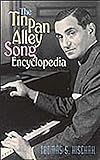 Thomas S. Hischak
 Art Tatum
  Lester Young
 Lionel Hampton and Oscar Peterson
 Rosemary Clooney
 The Hi-Lo's
0 Response to "Back Home Again in Indiana Original Lyrics"
Post a Comment